


 Image
Ugc models
Persona Blueprint — AI Model Identity Sheet
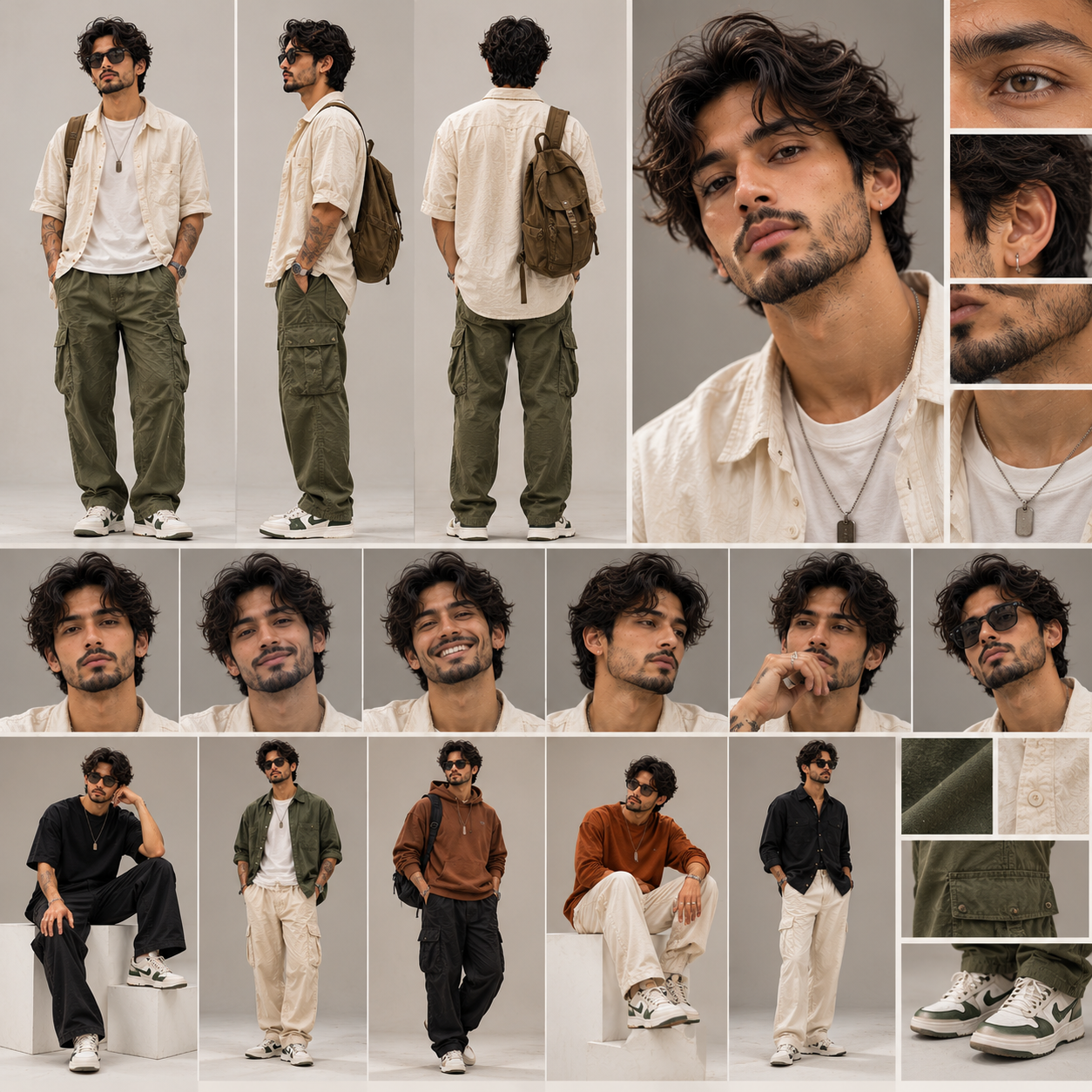
Persona Blueprint creates a comprehensive visual identity sheet for an AI-generated model. It combines front, profile, and rear views with detailed facial portraits, multiple expressions, full-body poses, and clothing or accessory close-ups in one structured composition. Designed for UGC advertising, fashion campaigns, lifestyle content, and AI creator workflows, the template helps establish a recognizable model identity that can be reused across different scenes, products, and campaigns.
Create a professional, highly detailed AI model identity reference sheet featuring one original young adult male fashion creator. The purpose is to establish a consistent visual identity that can be reused in future UGC advertisements, product demonstrations, fashion campaigns, lifestyle scenes, and creator-style content.
The result must resemble a professional casting reference board photographed in a controlled studio, with a clean structured layout, consistent lighting, neutral backgrounds, realistic anatomy, and multiple reference views of the exact same person.
1. Model Identity
Create an original young adult man with medium olive-brown skin, naturally wavy dark hair, a neatly groomed short beard, expressive dark eyes, and a relaxed, confident appearance.
Give him distinctive but natural facial characteristics that make him recognizable across different images. Maintain consistent facial proportions, hairline, hairstyle, eye shape, nose, lips, jawline, skin tone, facial hair, and body proportions throughout the sheet.
His overall appearance should feel contemporary, relatable, and suitable for fashion and lifestyle UGC advertising.
Important: Every panel must show the same individual. Do not create different people who merely look similar.
2. Professional Studio Setup
Use a seamless warm-gray or soft beige studio background with soft, diffused lighting.
Maintain consistent camera perspective, exposure, white balance, and shadow direction across all panels. Use realistic skin texture, visible hair strands, natural fabric folds, and accurate body proportions.
The lighting should be neutral enough to preserve the model's actual skin tone without strong color casts or dramatic cinematic effects.
3. Reference Sheet Layout
Create a precise, well-organized square composition with clearly separated photographic panels and narrow, consistent gutters.
Top section — Full-body identity views
Include three full-body photographs of the model:
Front-facing standing view with a relaxed neutral posture.
Three-quarter or side-profile view showing facial structure and body proportions.
Rear view showing hairstyle, clothing silhouette, and overall build.
Keep the camera height and distance consistent. Show the entire body, including footwear, without cropping the head or feet.
Upper-right section — Facial identity
Include one large, sharply detailed head-and-shoulders portrait showing the model's defining facial features.
Add two or three smaller detail crops of the eyes, hair, and beard where space allows. Keep the crops anatomically accurate and consistent with the primary portrait.
Middle section — Expression references
Arrange six head-and-shoulders portraits in a clean horizontal or compact grid, showing:
Neutral expression.
Friendly smile.
Natural laugh.
Thoughtful expression.
Looking slightly to the side.
Confident, relaxed expression.
Keep the facial identity, hairstyle, and lighting unchanged. Vary only the expression and subtle head direction.
Bottom section — Styling and outfit references
Include five smaller full-body or three-quarter photographs showing the model in coordinated casual outfits, such as:
Black oversized T-shirt with relaxed black trousers.
Ivory T-shirt with olive cargo pants.
Cream overshirt with neutral trousers.
Rust-brown sweatshirt with casual pants.
Dark casual shirt with cream trousers.
Maintain the same model identity across all outfits. The clothing may change, but the face, body proportions, and defining characteristics must remain consistent.
Detail panel
Add a narrow strip of close-ups showing clothing fabric, footwear, accessories, and one or two neutral material swatches. These should support the reference-sheet purpose rather than turn the image into a decorative mood board.
4. Wardrobe and Styling
Use contemporary casual fashion suitable for an everyday male UGC creator.
Choose relaxed silhouettes, neutral colors, realistic fabric textures, and understated accessories. Avoid excessive jewelry, large logos, elaborate costumes, or distracting patterns.
Keep the base outfit consistent across the primary front, side, and rear views. Introduce alternate outfits only in the dedicated wardrobe section.
5. Identity Consistency Requirements
Prioritize identity consistency above decorative styling.
The model must retain the same:
Facial structure and recognizable features.
Skin tone and natural complexion.
Hairstyle, hairline, and hair color.
Eye color and shape.
Beard style and density.
Height impression, build, and body proportions.
Distinctive marks or accessories, if included.
Do not change the model's age, ethnicity, hairstyle, or facial structure between panels. Avoid duplicate or blended faces, inconsistent clothing within a single reference set, distorted hands, and unrealistic anatomy.
6. Clean Reference-Board Design
Use a restrained professional layout with thin dividers, a consistent neutral background, and minimal labels.
A small header may read “MODEL IDENTITY SHEET”, with secondary labels such as “FRONT VIEW,” “PROFILE,” “EXPRESSIONS,” and “WARDROBE REFERENCES.”
Keep typography small and functional. The photographs must remain the main focus. Avoid decorative handwritten notes, oversized headlines, scrapbook textures, dramatic color swatches, and elaborate collage effects.
7. Final Output
Aspect ratio: EXACTLY 1:1 square, 1024 × 1024.
Create a polished, high-resolution model reference sheet that can serve as a visual guide for future image-generation tasks.
The final composition should be structured, consistent, realistic, easy to inspect, and suitable for use as a reference when creating the same AI model in different advertisements and environments.
Quality requirements: Photorealistic studio photography, consistent identity, natural skin texture, accurate anatomy, clear facial details, balanced lighting, realistic clothing materials, professional casting-board layout, and clean panel separation.
Negative constraints: No different identities between panels, no random people, no inconsistent facial features, no exaggerated expressions, no distorted anatomy, no extra limbs or fingers, no excessive retouching, no dramatic lighting changes, no busy backgrounds, no unnecessary logos, no watermarks, no illegible labels, no portrait-format output, and no white padding outside the square composition.