


 Image
Ugc models
Frame of Character — Black Male Model Editorial
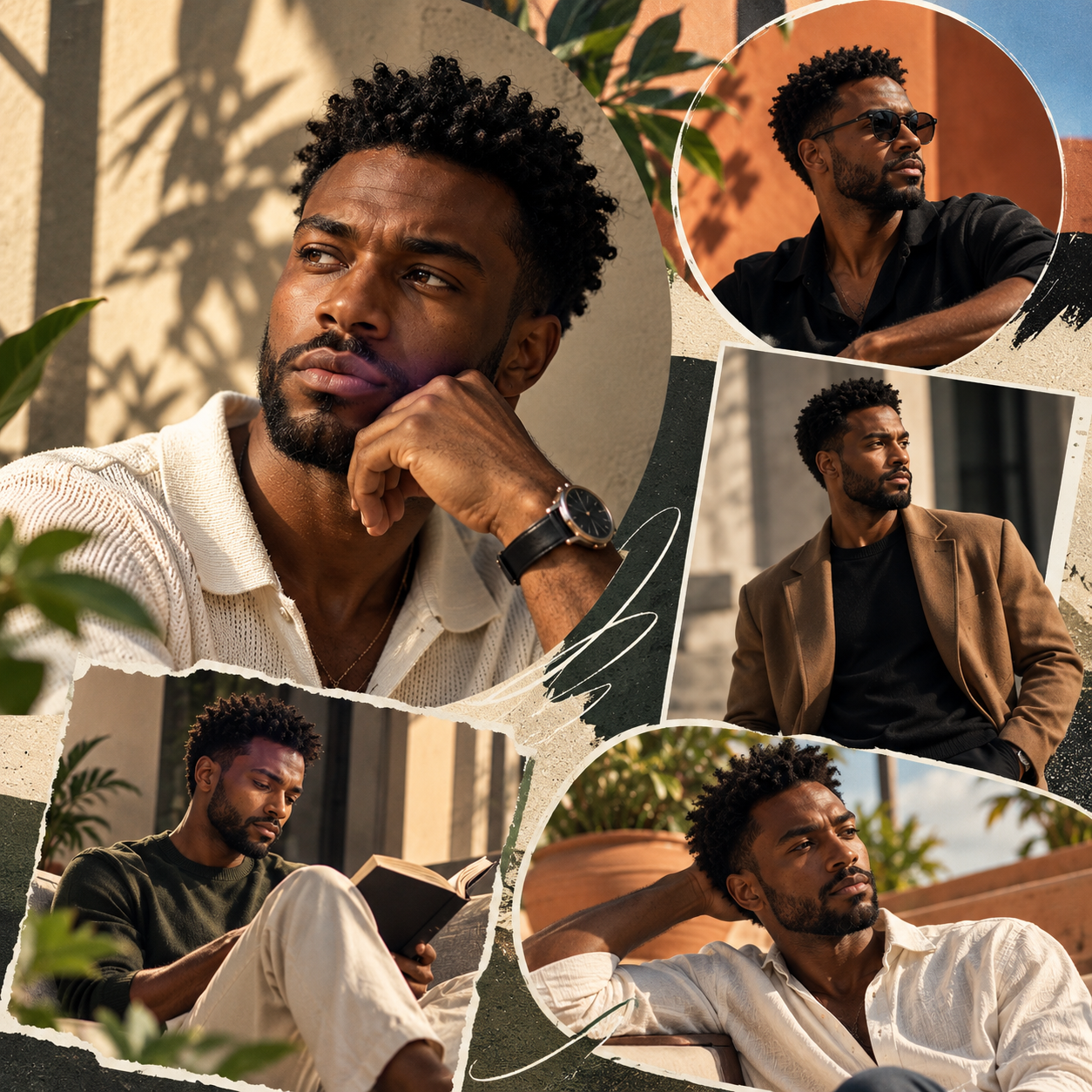
Frame of Character presents a stylish Black male model through an artistic, asymmetrical editorial collage. A prominent close-up portrait is surrounded by circular photographs, tilted rectangular frames, and torn-paper cutouts capturing different outfits, expressions, and lifestyle moments. A rich palette of cream, terracotta, forest green, charcoal, and warm brown creates a sophisticated visual identity. Designed for AI model references, UGC creator concepts, menswear campaigns, lifestyle advertising, and personal-care promotions.
Create a premium, photorealistic Black male model identity collage featuring the same stylish young adult Black man across five distinct photographs. The composition should resemble an art-directed contemporary fashion editorial, using an unconventional asymmetrical layout, circular photo crops, torn-paper frames, overlapping photographs, and expressive portrait photography.
1. Model Appearance
Feature a Black man in his late twenties with rich deep-brown skin, short natural coiled hair with a defined shape, a neatly trimmed beard, expressive dark-brown eyes, and distinctive facial features.
Give him a confident yet approachable appearance, with realistic skin texture, natural facial detail, and a relaxed, thoughtful expression.
Maintain the exact same facial identity, hairstyle, complexion, beard, and body proportions across all photographs.
2. Wardrobe
Style the model in contemporary premium casualwear:
Cream textured knit shirt for the main portrait.
Deep forest-green sweater with relaxed ivory trousers for a reading scene.
Black casual shirt with tailored dark trousers for a lifestyle portrait.
Camel-brown jacket over a charcoal shirt for a smart-casual look.
Ivory linen shirt for an outdoor relaxed portrait.
Add a restrained wristwatch and minimal accessories where appropriate. Use realistic fabric textures and natural clothing folds. Keep the wardrobe cohesive without making every photograph look identical.
3. Asymmetrical Collage Layout
Create an exact 1:1 square composition with five photographs arranged in an organic, non-geometric layout. Avoid uniform grids, equal-sized panels, and repeated rectangular strips.
Hero portrait: Place a large close-up in the upper-left area, framed by an irregular torn-paper edge. The model wears a cream knit shirt, rests his chin lightly on one hand, and looks thoughtfully off-camera.
Circular portrait: Place a large circular photograph in the upper-right corner showing the model wearing sunglasses and a black shirt against a terracotta wall.
Tilted editorial frame: Position a slightly rotated rectangular photograph along the right-center, showing the model in a camel-brown jacket and charcoal shirt, standing confidently against modern architecture.
Torn-paper lifestyle panel: Place a wider photograph in the lower-left section showing the model reading a book while seated comfortably in a deep-green sweater and ivory trousers.
Organic oval portrait: Place an oval-cropped outdoor photograph in the lower-right section, featuring the model in an ivory linen shirt, relaxed in natural sunlight with greenery softly blurred behind him.
Overlap some frames slightly while preserving clear separation between photographs. Use thin cream borders, subtle shadows, and a few restrained hand-drawn curved lines to connect the composition.
The large portrait should remain the visual anchor, while the smaller frames provide variety in pose, outfit, and setting.
4. Color Palette
Use a rich, sophisticated palette of:
Warm cream and ivory.
Deep forest green.
Burnt terracotta.
Camel brown.
Charcoal black.
Natural golden highlights.
The colors should complement the model's complexion and create a premium editorial atmosphere. Avoid repeating the previous beige-and-navy or monochrome styling.
5. Background and Textures
Use a warm off-white paper background with subtle grain, distressed edges, and selective dark-green or terracotta paper shapes behind the photographs.
Add realistic paper layering, gentle drop shadows, a few hand-drawn curves, and restrained editorial graphic accents. Keep the design tactile but polished.
Do not add excessive scrapbook decoration, film strips, color swatches, or large text.
6. Expressions and Photography
Capture natural, non-sensual expressions: thoughtful gazes, a subtle friendly smile, quiet concentration while reading, and a relaxed confident look.
Use a mixture of close-up portraits, medium shots, and environmental lifestyle photographs.
Lighting should combine soft directional sunlight, gentle shadows, realistic skin detail, and natural depth of field. Maintain a coherent photographic finish while allowing each scene to have its own visual character.
7. Final Output
Aspect ratio: EXACTLY 1:1 square, 1024 × 1024.
Produce a polished, high-resolution model collage with one consistent subject, an asymmetrical arrangement, organic circular and torn-paper frames, distinct lifestyle poses, and a refined earthy color palette.
Negative constraints: No different identities across panels, no additional people, no distorted anatomy, no extra fingers, no artificial skin smoothing, no exaggerated expressions, no sensual posing, no stereotypical cultural props, no brand logos, no watermarks, no excessive text, no rigid geometric grid, no portrait-format output, and no white padding outside the square composition.