

 Image
Ugc models
Azure Hours — Italian Summer Model Editorial
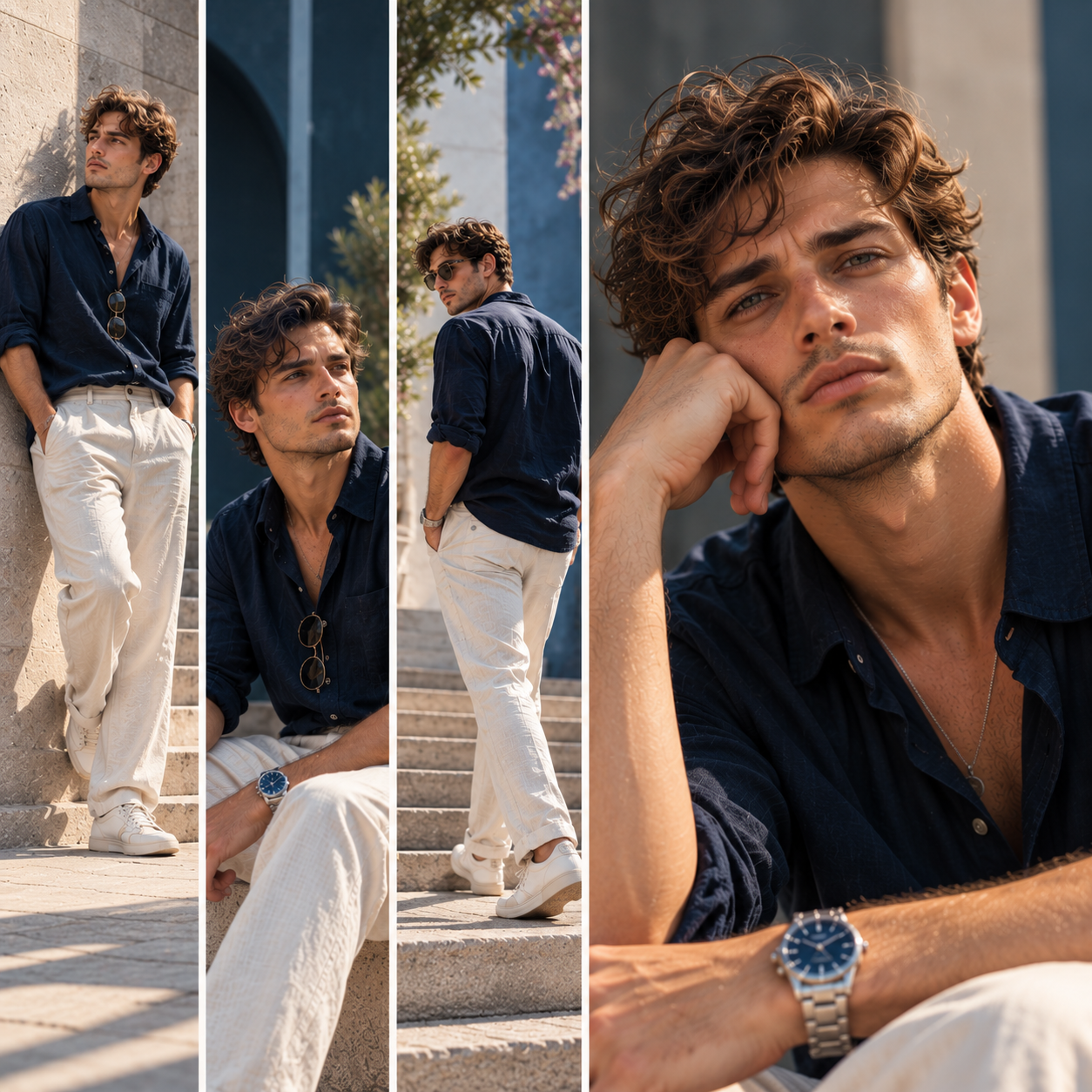
Azure Hours presents a sophisticated male fashion model through a luxury Mediterranean editorial featuring three narrow vertical lifestyle portraits and one dominant close-up. The model wears a deep navy linen shirt, ivory trousers, clean white sneakers, and understated silver accessories against sunlit stone architecture and cool blue architectural details. Natural textures, relaxed poses, crisp panel dividers, and warm skin tones create a refined summer campaign aesthetic suitable for fashion brands, lifestyle advertising, AI creator references, and UGC model libraries.
Create a premium, photorealistic Mediterranean male fashion editorial contact sheet featuring one original Italian-inspired male model. The composition should resemble a luxury summer fashion campaign, combining relaxed lifestyle poses, refined clothing, sunlit architecture, and a striking close-up portrait.
1. Model Appearance
Feature a handsome young adult man in his late twenties with a distinctive Mediterranean appearance, light olive skin, deep-set hazel-brown eyes, a defined jawline, a straight nose, and subtle natural stubble.
Give him thick, dark chestnut hair with a loose, textured side-swept style, a slightly tousled finish, and natural volume. His face should have distinctive, recognizable features, natural skin texture, and a confident yet relaxed expression.
Maintain the same facial identity, hairstyle, skin tone, eye color, facial proportions, and body build throughout all four panels.
2. Outfit and Accessories
Dress the model in a premium deep navy linen shirt with the top buttons casually open and the sleeves rolled to the forearms. Pair it with tailored ivory linen trousers and clean white leather sneakers.
Add a refined stainless-steel wristwatch, a subtle silver pendant necklace, and understated sunglasses that appear in one of the supporting panels.
The linen should have realistic weave, natural creases, and soft movement. The styling should communicate understated Italian summer luxury without visible branding or excessive accessories.
3. Signature Four-Panel Layout
Create an exact square composition divided into four photographic sections, with three slim vertical panels occupying approximately the left half and one large portrait occupying the right half.
Separate the photographs with narrow, clean ivory-white dividers.
Panel 1 — Full-body portrait: The model leans casually against a pale limestone wall, one leg relaxed, hands in his pockets, looking toward the sunlight. Show the entire outfit and footwear.
Panel 2 — Seated portrait: The model sits on a stone step beside a deep-blue architectural wall, looking thoughtfully toward the side. His wristwatch and relaxed shirt styling should be visible.
Panel 3 — Walking or rear three-quarter view: Capture the model walking up elegant stone steps, with his head turned slightly over his shoulder. Show the back and side of the navy shirt and the natural drape of the ivory trousers.
Panel 4 — Dominant close-up: Fill the entire right panel with a detailed head-and-shoulders portrait. The model rests one hand near his face, looking calmly toward the camera. Emphasize the textured chestnut hair, hazel-brown eyes, natural stubble, linen fabric, and wristwatch near the lower edge of the frame.
The close-up must be the strongest visual element. Keep the smaller panels narrow, architectural, and editorial rather than turning the composition into a symmetrical grid.
4. Environment and Architecture
Set the shoot in a sophisticated Mediterranean streetscape inspired by Italian coastal towns and historic European architecture.
Use pale limestone walls, deep-blue painted doorways, elegant stone staircases, weathered plaster, subtle greenery, and small glimpses of clear blue sky.
Each supporting panel may show a slightly different architectural detail while retaining the same location, lighting, and overall visual identity.
Avoid famous landmarks, crowded streets, elaborate tourist scenery, or distracting props. The environment should complement the model rather than compete with him.
5. Color Palette
Use a distinctive cool Mediterranean palette:
Deep navy blue for the shirt and architectural accents.
Soft ivory for the trousers, sneakers, and panel dividers.
Pale limestone and warm sand for the surroundings.
Muted teal and dusty blue for subtle environmental details.
Natural olive skin tones with restrained golden highlights.
Balance the warm sunlight with cool blue shadows. Keep the navy shirt rich and clearly differentiated from the pale background.
Avoid the previous terracotta-and-olive-dominant palette. This version should feel cooler, cleaner, and more coastal.
6. Lighting and Photography
Use directional Mediterranean sunlight with soft but defined shadows, natural skin highlights, realistic fabric texture, and cinematic depth.
The three narrow panels should resemble candid moments from a professional fashion shoot. The main portrait should use a slightly closer camera perspective with sharp facial detail and a softly blurred architectural background.
Maintain consistent exposure, skin tone, and color grading across the entire composition.
7. Art Direction
Keep the design photography-led and minimalist.
Do not add scrapbook textures, film strips, color swatches, decorative handwriting, large typography, magazine headlines, or graphic stickers. The narrow white dividers and the contrast between full-body views and the large portrait provide the complete visual structure.
The result should look like a premium menswear campaign contact sheet rather than a decorative mood board.
8. Final Output
Aspect ratio: EXACTLY 1:1 square, 1024 × 1024.
Create a polished, high-resolution editorial collage with realistic anatomy, consistent model identity, accurate clothing details, natural poses, and professional fashion photography.
Negative constraints: No different faces between panels, no hairstyle changes, no distorted hands, no extra fingers, no inconsistent outfit details, no excessive retouching, no oversaturated colors, no additional people, no visible brand logos, no watermarks, no typography overlays, no portrait-format output, and no white padding outside the square canvas.