


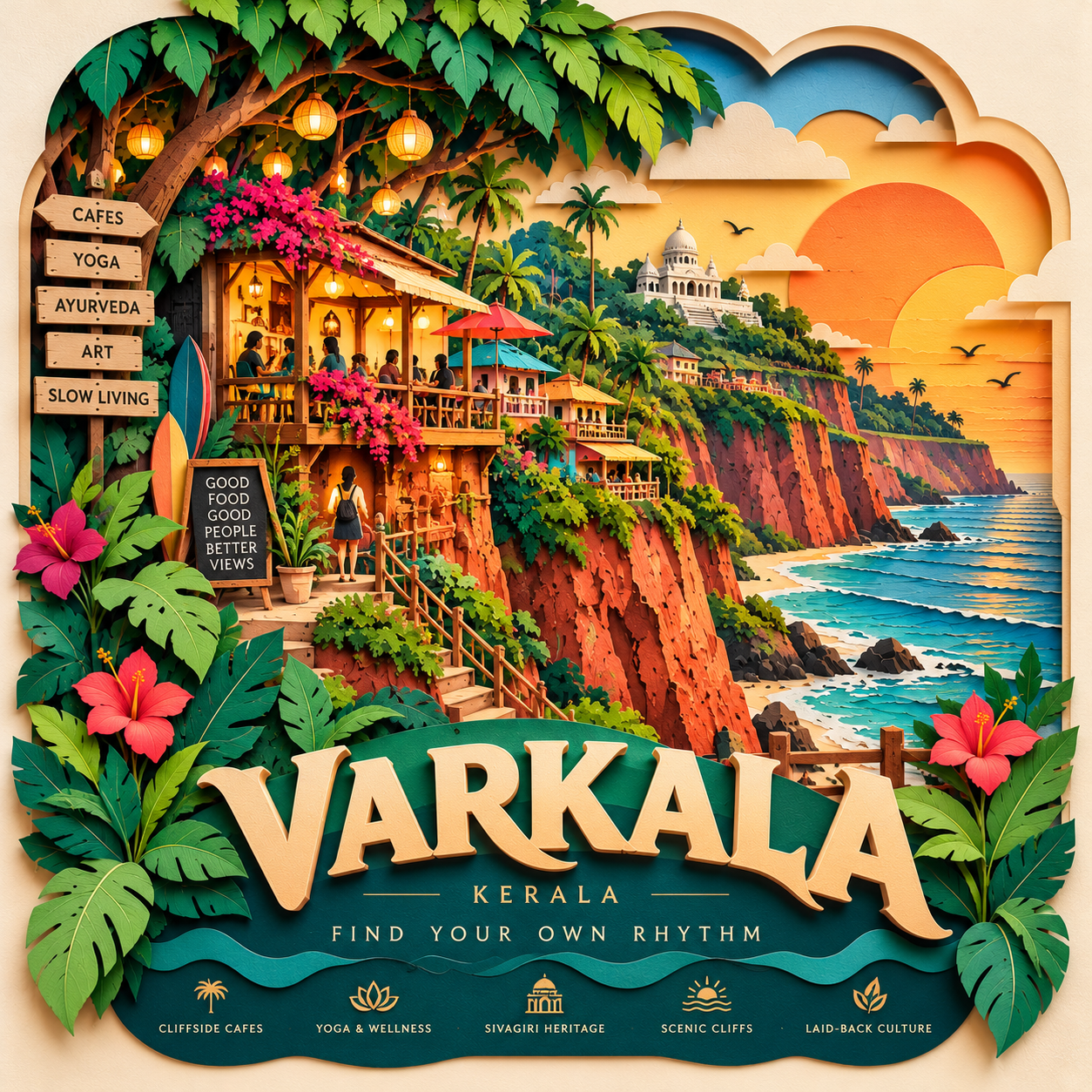
 Image
Travel posters
Paper Trails — 3D Paper-Cut Travel Poster
Transform any destination into a vibrant, premium 3D paper-cut travel poster featuring iconic local landscapes, distinctive architecture, cultural details, lush scenery, and bold dimensional typography.
Create a premium, visually distinctive 3D layered paper-cut travel poster for {{DESTINATION}}, located in {{REGION_OR_COUNTRY}}.
1. Destination Intelligence
Automatically identify the destination’s most distinctive visual identity. Select the strongest combination of recognizable landscapes, geological formations, architecture, cultural heritage, local lifestyle, vegetation, crafts, street scenes, and regional design elements.
Prioritize features that genuinely distinguish this destination from other places. Avoid generic tourism imagery when a more specific visual story is available.
Destination: {{DESTINATION}}
Region or Country: {{REGION_OR_COUNTRY}}
Signature Features: {{SIGNATURE_FEATURES}}
Cultural Identity: {{CULTURAL_IDENTITY}}
Local Architecture: {{LOCAL_ARCHITECTURE}}
Landscape and Environment: {{LANDSCAPE_DETAILS}}
Local Lifestyle: {{LOCAL_LIFESTYLE}}
Main Visual Concept: {{CREATIVE_CONCEPT}}
Primary Headline: {{PRIMARY_HEADLINE}}
Supporting Tagline: {{SUPPORTING_TAGLINE}}
Optional Supporting Labels: {{SUPPORTING_LABELS}}
If any optional variable is blank, intelligently determine an appropriate choice from the destination’s real-world identity. Do not invent specific landmarks or cultural traditions.
2. Core Creative Concept
Reimagine the destination as an intricate miniature world handcrafted entirely from layered, colored paper.
Build the composition from multiple overlapping sheets of thick art paper, carefully cut silhouettes, sculpted paper forms, folded edges, recessed layers, curled details, and beautifully rendered dimensional shadows.
Every element—including the landscape, buildings, trees, flowers, clouds, pathways, decorative symbols, and typography—must appear to be physically constructed from paper.
The finished image should resemble an elaborate handcrafted paper sculpture photographed in a professional design studio, combining the charm of traditional paper dioramas with the polish of a premium contemporary travel campaign.
3. Signature Landmark Composition
Make the destination’s most distinctive feature the unmistakable visual centerpiece.
Arrange the surrounding environment as a rich, layered scene with a clear foreground, middle ground, and background. Use overlapping paper shapes to create depth, scale, and a sense of discovery.
Integrate recognizable local landmarks and architectural silhouettes naturally into the scene. Add smaller environmental details that reveal the destination’s personality, such as local cafés, distinctive rooftops, regional vegetation, winding pathways, market stalls, cultural structures, or characteristic street life when relevant.
Avoid relying on the same visual formula for every destination. The central composition must change according to the location’s actual character.
For example, a cliffside town might feature dramatic terracotta rock formations and tiny buildings tucked into the cliffs, while a historic city might use intricate architecture, layered streets, courtyards, and distinctive urban silhouettes.
4. Authentic Local Identity
Accurately reflect the destination’s geography, culture, architecture, and atmosphere.
Use a few highly recognizable local details instead of filling the composition with unrelated symbols. Keep cultural references respectful and geographically appropriate.
Do not automatically include beaches, temples, religious statues, mountains, monuments, or other familiar travel imagery unless they genuinely suit the selected destination.
The result should make viewers feel that they are looking at this specific place, not a generic travel illustration with a different name.
5. Premium Paper-Cut Craftsmanship
Use tactile, visibly layered paper with:
Thick, precisely cut paper edges and stacked silhouettes.
Subtle paper fibers, grain, embossing, and handcrafted imperfections.
Soft ambient occlusion between overlapping layers.
Realistic cast shadows that reveal the depth of each paper element.
Delicate folded leaves, flowers, roofs, clouds, and architectural details.
Intricate miniature elements that remain visually readable at poster size.
Clean, sculptural contours and a polished handmade finish.
Maintain the visual consistency of a physical paper artwork. Do not mix in photorealistic scenery, glossy CGI objects, plastic materials, or unrelated illustration styles.
6. Color Palette and Lighting
Generate a destination-specific palette inspired by the actual environment and cultural character of the location.
Use a harmonious combination of rich accent colors, natural landscape tones, contrasting paper layers, and carefully controlled highlights.
Lighting should be warm, directional, and cinematic, producing attractive depth and shadows between the paper layers. Use a background that complements the artwork and reinforces the handcrafted collectible-poster aesthetic.
Avoid muddy colors, excessive saturation, flat lighting, and visual clutter.
7. Typography and Poster Layout
Display {{DESTINATION}} as the dominant headline in large, beautiful, dimensional paper-built lettering.