


 Image
Portraits
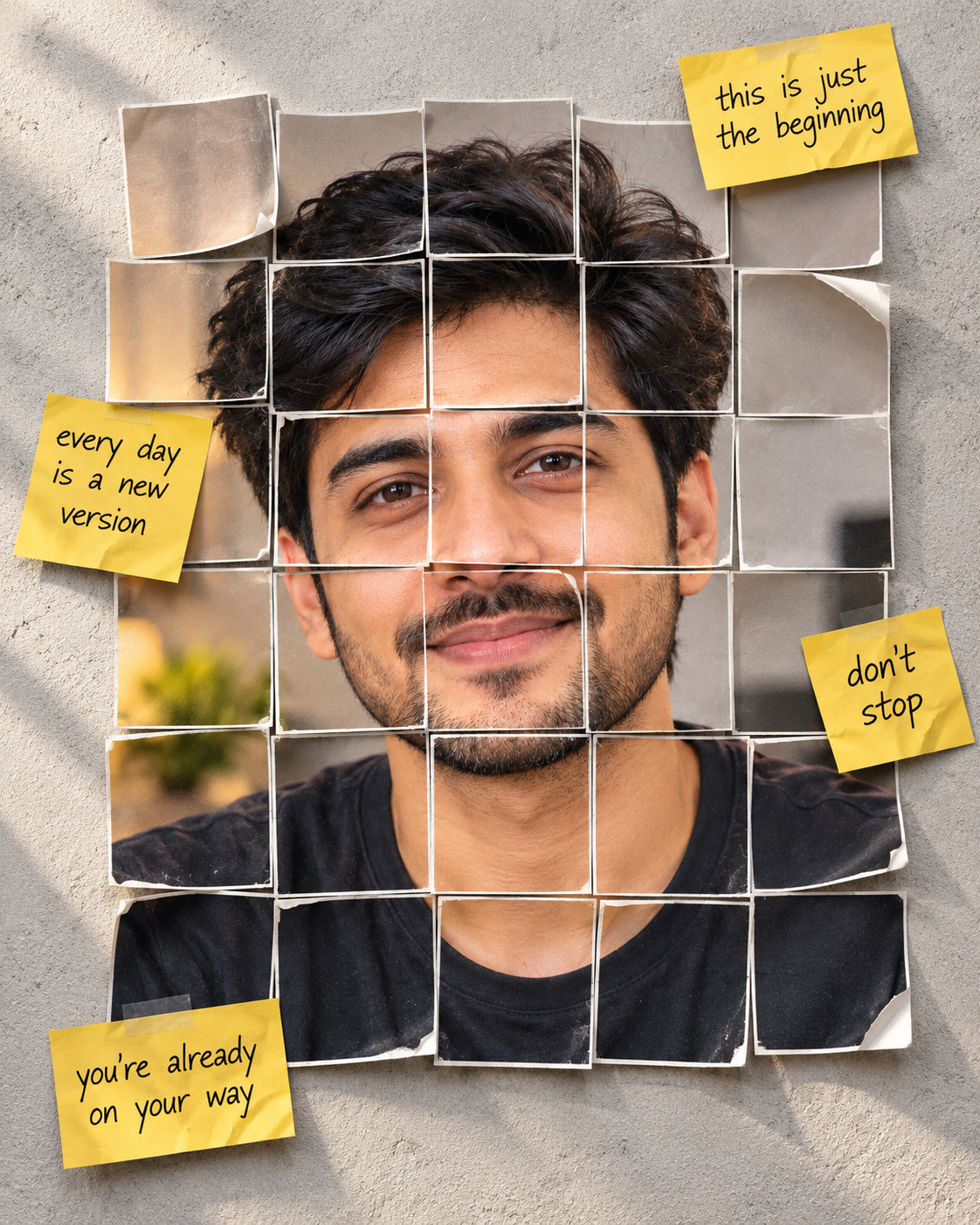
Photorealistic 3D Portrait Mosaic Collage with Handwritten Stickers
Transform your uploaded portrait into a stunning 3D photo mosaic collage featuring square photographic paper tiles, realistic curled edges, soft shadows, and a textured concrete wall. Complete the creative editorial look with four yellow handwritten motivational stickers. Perfect for artistic portraits, social media visuals, creative posters, and personalized photo art.
Use the uploaded photograph as the primary and exact source image. Preserve the identity, facial features, hairstyle, expression, skin tone, clothing, and camera angle of the person in the uploaded photo. Do not generate a different person, replace the face, or reinterpret the portrait.
Transform the uploaded photograph into a sophisticated, photorealistic physical collage poster. The original photograph must remain clearly recognizable beneath a mosaic of small, individual square photographic paper cards.
1. Background and Portrait
Create a vertical editorial poster featuring the uploaded portrait mounted against a light-gray, subtly textured concrete wall.
Keep the person's face as the main focal point, with the eyes positioned in the upper third of the composition. Include the neck and upper torso wherever visible in the original photograph.
Use soft, diffused daylight coming from the upper left. Preserve natural skin tones, realistic facial texture, subtle film grain, and gentle tonal contrast.
2. Physical Mosaic — Main Visual Effect
Transform the uploaded photograph itself into a physical mosaic made from approximately 25–36 small square photographic paper cards arranged in a 5–6 column by 5–6 row grid.
The mosaic must be visibly integrated with the original portrait, not appear as a separate grid floating beside it.
Each card contains a corresponding portion of the original uploaded photograph.
The face, eyes, nose, mouth, hair, clothing, and background must align across neighboring cards to reconstruct the same recognizable portrait.
Preserve the correct spatial continuity between adjacent cards. The eyes must not be duplicated, facial features must not shift, and the portrait must not become a collection of unrelated images.
Give each square card a realistic matte photographic-paper surface, subtle texture, and clean white edges.
Introduce slight variations in card alignment, with a few cards subtly tilted, offset, or lifted at their corners.
Add thin white gaps between cards, revealing the underlying portrait or the light-gray wall wherever appropriate.
Create realistic contact shadows beneath raised edges and soft directional shadows across the face.
Allow selected cards to sit slightly above the surface, producing a convincing three-dimensional paper collage effect.
Keep the mosaic dense and visually coherent. The original person should remain immediately recognizable at first glance.
Important: The mosaic tiles must be derived from the uploaded photograph itself. Do not substitute random photos, different faces, repeated facial features, abstract patterns, or generic stock imagery. The effect should resemble the original photograph carefully cut into small square prints and physically reassembled by hand.
3. Four Yellow Handwritten Stickers
Place exactly four small, warm-yellow paper stickers around the portrait. Use a natural, slightly imperfect paper texture, handwritten black gel-pen lettering, and subtle shadows that make each sticker appear physically attached to the concrete wall.
Use these exact texts, with no additional words:
Top right: “this is just the beginning”
Left side: “every day is a new version”
Right side: “don't stop”
Bottom left: “you're already on your way”
Keep the handwriting casual, authentic, and legible. Use no numbers, icons, illustrations, or decorative symbols. Position the stickers around the mosaic without obscuring the person's eyes or essential facial features.
4. Composition and Art Direction
Create a centered, balanced composition with comfortable negative space around the edges. The overall aesthetic is a contemporary creative-studio mood board: tactile, minimal, thoughtful, and editorial.
The photograph and mosaic should dominate the composition. The yellow stickers provide small accents of color against the neutral concrete background.
Use realistic paper edges, natural imperfections, physically accurate lighting, convincing depth, and restrained shadows. Avoid excessive decoration.
5. Camera and Output
Photorealistic editorial photography, 85mm portrait-lens aesthetic, f/2.0 depth of field, soft diffused daylight, sharp eyes, detailed paper fibers, realistic skin texture, natural film grain, high dynamic range, physically accurate shadows, premium art direction.
Vertical 4:5 aspect ratio, high resolution, highly detailed, realistic materials.
Negative Instructions
Do not change the person's identity or facial expression. Do not generate a replacement portrait. No duplicated eyes, distorted facial features, mismatched facial fragments, random images inside the mosaic, floating cards, thick black grid lines, excessive gaps, plastic-looking paper, cartoon rendering, artificial skin smoothing, extra stickers, extra text, numbers, icons, logos, watermarks, decorative frames, or unnecessary objects.