


 Image
Magazine covers
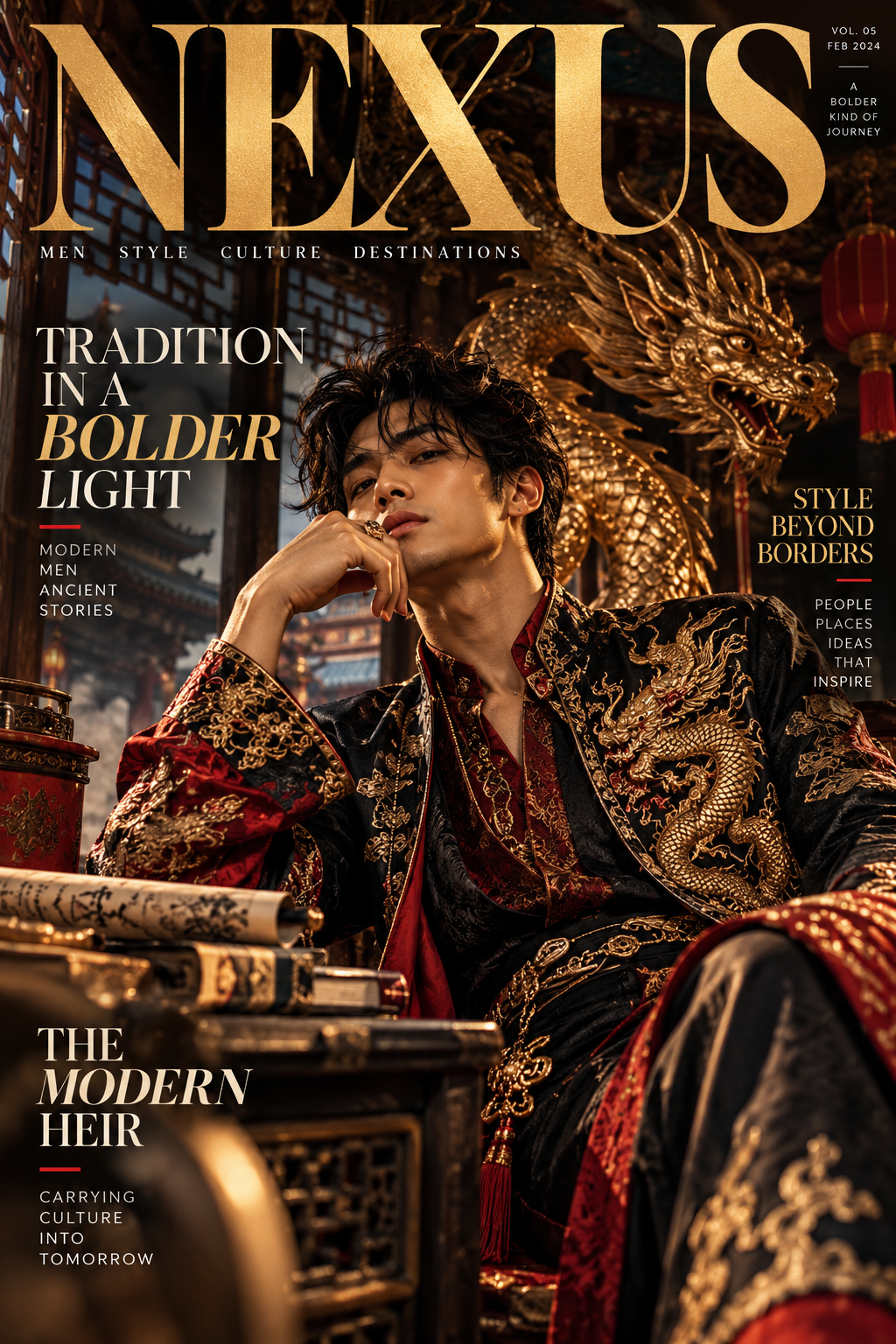
REGALIA — Luxury Men's Editorial Cover
REGALIA is a premium editorial cover generator designed to transform male fashion portraits into visually striking luxury magazine covers. Combining cinematic photography, sophisticated typography, elaborate wardrobe styling, cultural influences, and dramatic environmental storytelling, this template creates the visual language of high-end men's fashion publications. Experiment with different male models, ethnicities, fashion aesthetics, cultural themes, mythical creatures, architectural settings, and editorial narratives to create distinctive magazine cover concepts.
Create an exceptionally sophisticated, photorealistic luxury men's fashion magazine cover featuring one original adult male fashion model.
The image should resemble a premium international fashion publication, art-directed by an experienced luxury fashion photographer and editorial design team.
Combine a powerful male portrait, distinctive designer-inspired styling, dramatic environmental storytelling, elegant oversized typography, and meaningful editorial headlines.
The final image must feel like a real luxury fashion publication rather than a conventional promotional poster.
Every generation should introduce a fresh model identity, wardrobe, environment, cultural influence, visual narrative, and magazine layout.
A. Dynamic Inputs
Magazine identity
Magazine name: [MAGAZINE_NAME]
Magazine tagline: [MAGAZINE_TAGLINE]
Issue number: [ISSUE_NUMBER]
Publication date: [PUBLICATION_DATE]
Special edition: [SPECIAL_EDITION]
Magazine category: [MAGAZINE_CATEGORY]
Male model identity
Model name: [MODEL_NAME]
Gender presentation: Male
Adult age range: [AGE_RANGE]
Ethnicity or cultural background: [ETHNICITY]
Nationality: [NATIONALITY]
Skin tone: [SKIN_TONE]
Face shape: [FACE_SHAPE]
Facial features: [FACIAL_FEATURES]
Eye color: [EYE_COLOR]
Hairstyle: [HAIRSTYLE]
Facial hair: [FACIAL_HAIR]
Body build: [BODY_BUILD]
Expression: [EXPRESSION]
Pose: [POSE]
Fashion direction
Fashion aesthetic: [FASHION_AESTHETIC]
Main outfit: [MAIN_OUTFIT]
Outerwear: [OUTERWEAR]
Accessories: [ACCESSORIES]
Footwear: [FOOTWEAR]
Fabric and materials: [MATERIALS]
Outfit color palette: [OUTFIT_COLORS]
Styling details: [STYLING_DETAILS]
Creative concept
Editorial theme: [EDITORIAL_THEME]
Cultural inspiration: [CULTURAL_INSPIRATION]
Mythical or symbolic element: [MYTHICAL_ELEMENT]
Main story: [MAIN_STORY]
Environment: [ENVIRONMENT]
Background details: [BACKGROUND_DETAILS]
Atmosphere: [ATMOSPHERE]
Visual narrative: [VISUAL_NARRATIVE]
Magazine text
Main headline: [MAIN_HEADLINE]
Supporting headline: [SUPPORTING_HEADLINE]
Secondary coverlines: [SECONDARY_COVERLINES]
Featured quote: [FEATURED_QUOTE]
Special feature: [SPECIAL_FEATURE]
Art direction
Primary color: [PRIMARY_COLOR]
Secondary color: [SECONDARY_COLOR]
Accent color: [ACCENT_COLOR]
Typography style: [TYPOGRAPHY_STYLE]
Layout direction: [LAYOUT_STYLE]
Photography style: [PHOTOGRAPHY_STYLE]
Lighting: [LIGHTING_STYLE]
Aspect ratio: [ASPECT_RATIO]
Text language: [TEXT_LANGUAGE]
Infer sensible values for any missing inputs. All generated details must work together as one cohesive editorial concept.
B. Magazine Masthead
Create a distinctive original magazine identity using [MAGAZINE_NAME] as the dominant masthead.
Position the masthead prominently across the upper portion of the cover. Use sophisticated, oversized typography that complements the fashion direction.
Possible typographic approaches:
High-contrast luxury serif lettering.
Modern editorial serif with dramatic proportions.
Elegant condensed uppercase typography.
Minimalist luxury sans-serif lettering.
Allow the masthead to interact with the photograph naturally, including subtle overlap behind the model or environmental elements.
Include compact issue information, publication date, and magazine tagline.
Never use existing magazine names or imitate a recognizable publication's exact masthead.
C. Featured Male Model
Create a compelling full-length or three-quarter portrait of [MODEL_NAME].
Preserve the specified:
Ethnicity and cultural background.
Skin tone and facial identity.
Face shape and facial proportions.
Hairstyle and facial hair.
Body build.
Outfit and accessories.
The model should have a confident, composed, editorial presence with a natural expression and distinctive body language.
Use [POSE] to communicate the personality and narrative of [EDITORIAL_THEME].
Avoid generic catalogue-model poses. The model should feel like the protagonist of a cinematic fashion story.
D. Luxury Fashion Styling
Dress the model in [MAIN_OUTFIT], incorporating [OUTERWEAR], [ACCESSORIES], and [FOOTWEAR].
Use [MATERIALS] to create believable fabric texture, embroidery, surface reflections, and fine construction details.
The styling should feel premium, distinctive, and carefully coordinated with [OUTFIT_COLORS].
Possible directions include:
Modern tailored luxury.
Contemporary traditional menswear.
Regal embroidered couture.
Futuristic dark fashion.
Minimalist monochrome styling.
Avant-garde editorial fashion.
Heritage-inspired formalwear.
Contemporary street-luxury.
Ensure that the outfit feels original and does not reproduce an identifiable designer's signature look.
E. Cultural and Mythical Art Direction
Build the editorial concept around [CULTURAL_INSPIRATION] and [MYTHICAL_ELEMENT].
If a mythical creature or symbolic figure is specified, integrate it into the composition as a visually meaningful companion or environmental presence.
Possible elements include:
A magnificent golden dragon.
A celestial phoenix.
A mythical guardian lion.
An ancient serpent.
A spectral wolf.
A monumental eagle.
A fantastical winged creature.
The mythical element should complement the model's styling, pose, and narrative rather than overpowering the portrait.
Respect the cultural context of architectural motifs, garments, symbols, and decorative details. Avoid combining unrelated cultural references without a coherent creative reason.
F. Cinematic Environment
Create an immersive environment using [ENVIRONMENT] and [BACKGROUND_DETAILS].
The setting should feel rich, atmospheric, and photographically believable.
Potential settings include:
An ornate historical palace.
A dramatic contemporary architectural interior.
A private luxury residence.
A traditional courtyard at night.
A futuristic ceremonial hall.
A grand library with antique objects.
A sculptural fashion installation.
An atmospheric cultural landmark-inspired setting.
Use [ATMOSPHERE] to establish the emotional tone.
Add depth through layered architecture, foreground objects, subtle haze, reflective surfaces, dramatic shadows, and carefully placed light sources.
G. Editorial Headline Design
Display [MAIN_HEADLINE] as the primary coverline.
It should be large, elegant, and visually connected to the model's identity and editorial theme.
Include [SUPPORTING_HEADLINE] and [SECONDARY_COVERLINES] in complementary positions.
The wording must be original and meaningful. It should sound like real luxury fashion journalism rather than generic advertising copy.
Examples of possible editorial directions:
The Art of Modern Heritage
Beyond the Ordinary
A New Kind of Royalty
The Future of Elegance
Tradition Reimagined
The New Rules of Masculinity
Generate original text based on the actual concept rather than automatically repeating these examples.
H. Secondary Editorial Elements
Add a small number of supporting cover elements:
Issue information.
A short editorial description.
One special edition callout.
A featured quote, if supplied.
A subtle publication barcode or issue marker.
Position them naturally in available negative space.
Do not overcrowd the cover. The model, masthead, and primary headline must remain the strongest elements.
I. Composition and Layout Variations
Choose a layout based on [LAYOUT_STYLE].
Do not use the same composition for every generation.
Possible compositions:
Dominant Portrait: Large model in the center, masthead across the top, editorial headlines distributed along the sides.
Asymmetrical Luxury: Model positioned off-center, large headline on the opposite side, masthead extending across the upper edge.
Cinematic Full-Bleed: Model and environment occupy the entire canvas, with typography integrated into architectural negative space.
Regal Editorial: Model positioned in a commanding seated pose, with a mythical or symbolic element framing the composition.
Minimalist Fashion: Strong portrait, restrained coverlines, generous negative space, and subtle typography.
Dramatic Low-Angle: Model photographed from a slightly lower perspective, creating a commanding silhouette and architectural scale.
Keep the composition visually balanced and publication-ready.
J. Lighting and Photography
Use [PHOTOGRAPHY_STYLE] and [LIGHTING_STYLE] to create premium fashion photography.
Prioritize:
Realistic skin texture.
Natural facial anatomy.
Detailed garment construction.
Rich material reflections.
Cinematic depth of field.
Controlled highlights and shadows.
Professional editorial color grading.
The lighting should complement [PRIMARY_COLOR], [SECONDARY_COLOR], and [ACCENT_COLOR].
Avoid excessive retouching, artificial skin smoothing, and exaggerated expressions.
K. Color Palette
Use a coordinated color system based on:
[PRIMARY_COLOR]
[SECONDARY_COLOR]
[ACCENT_COLOR]
Apply these colors consistently to the wardrobe, environment, mythical elements, and typography.
Create a distinctive visual identity for each generation instead of defaulting to gold, black, and red.
L. Text Accuracy
All visible text must be intentional and readable.
Preserve the exact spelling of:
Magazine masthead.
Model name, if displayed.
Main headline.
Supporting headlines.
Issue information.
Special edition callout.
Avoid duplicated text, meaningless lettering, fake logos, unrelated headlines, or random paragraphs.
M. Final Output
Generate one high-resolution, photorealistic luxury men's fashion magazine cover in [ASPECT_RATIO].
The final artwork must contain:
One distinctive adult male model.
Original luxury fashion styling.
A cinematic and immersive environment.
A recognizable original magazine masthead.
A meaningful primary headline.
Supporting editorial coverlines.
Sophisticated typography.
A coherent color palette.
Professional fashion photography.
Negative constraints: No female model, no multiple main subjects, no inconsistent facial features, no distorted hands, no generic fashion catalogue appearance, no copied luxury brand logos, no existing magazine mastheads, no duplicated headlines, no random text, no watermarks, and no unwanted borders or padding.