


 Image
Magazine covers
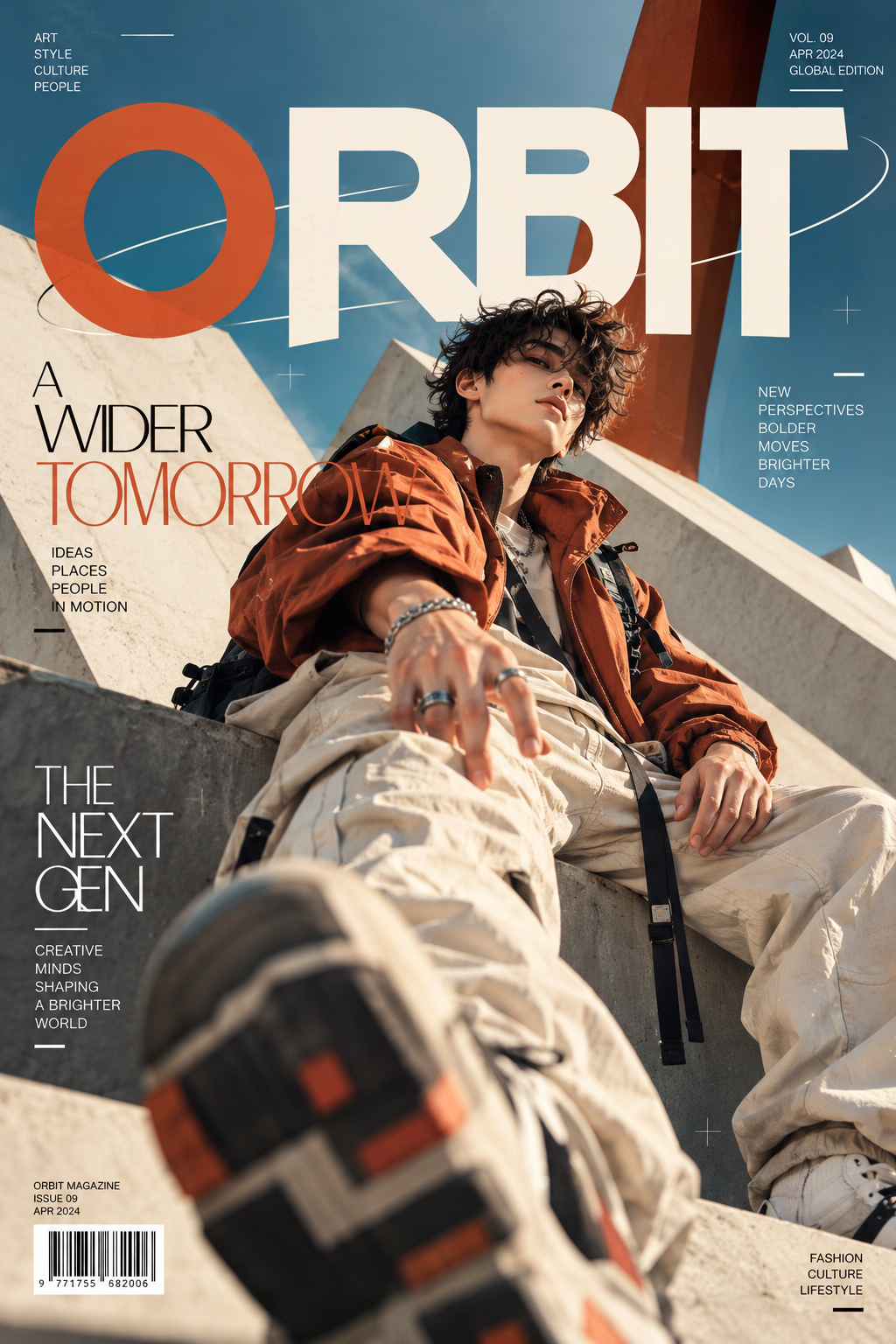
OFF-AXIS — Architectural Fashion Editorial
OFF-AXIS is a contemporary fashion editorial generator inspired by professional fashion photography and architectural visual storytelling. It combines dramatic camera perspectives, sculptural poses, modern architecture, rich textures, natural lighting, and sophisticated magazine typography to create distinctive editorial covers. Experiment with different male models, fashion aesthetics, locations, architectural structures, photography techniques, and color palettes to produce visually compelling magazine artwork.
Create an extraordinary, photorealistic luxury fashion magazine cover featuring one original adult male fashion model, photographed in a striking contemporary architectural environment.
The visual direction must feel like a high-end international fashion editorial captured by an award-winning fashion photographer.
Prioritize photographic storytelling over decorative graphic effects. Use unconventional camera positioning, strong perspective, architectural framing, carefully controlled foreground blur, expressive body language, and natural directional lighting.
The final composition should feel like a professionally art-directed fashion photograph transformed into a sophisticated editorial magazine cover.
Every generation should introduce a different model, pose, camera angle, wardrobe, architectural environment, color palette, and editorial layout.
A. Dynamic Inputs
Magazine Identity
Magazine name: [MAGAZINE_NAME]
Magazine subtitle: [MAGAZINE_SUBTITLE]
Issue number: [ISSUE_NUMBER]
Publication date: [PUBLICATION_DATE]
Special edition: [SPECIAL_EDITION]
Publication tagline: [PUBLICATION_TAGLINE]
Model Identity
Model name: [MODEL_NAME]
Gender: Male
Adult age range: [AGE_RANGE]
Ethnicity: [ETHNICITY]
Nationality: [NATIONALITY]
Skin tone: [SKIN_TONE]
Face shape: [FACE_SHAPE]
Facial features: [FACIAL_FEATURES]
Eye color: [EYE_COLOR]
Hairstyle: [HAIRSTYLE]
Hair color: [HAIR_COLOR]
Facial hair: [FACIAL_HAIR]
Body build: [BODY_BUILD]
Expression: [EXPRESSION]
Personality: [PERSONALITY]
Fashion Styling
Fashion aesthetic: [FASHION_AESTHETIC]
Main outfit: [MAIN_OUTFIT]
Outerwear: [OUTERWEAR]
Trousers: [TROUSERS]
Footwear: [FOOTWEAR]
Accessories: [ACCESSORIES]
Fabric and materials: [MATERIALS]
Outfit color palette: [OUTFIT_COLORS]
Styling details: [STYLING_DETAILS]
Photography Direction
Pose: [POSE]
Camera angle: [CAMERA_ANGLE]
Camera distance: [CAMERA_DISTANCE]
Lens choice: [LENS_CHOICE]
Perspective: [PERSPECTIVE]
Foreground element: [FOREGROUND_ELEMENT]
Framing: [FRAMING]
Depth of field: [DEPTH_OF_FIELD]
Lighting: [LIGHTING]
Photography mood: [PHOTOGRAPHY_MOOD]
Environment
Location: [LOCATION]
Architectural style: [ARCHITECTURAL_STYLE]
Environment: [ENVIRONMENT]
Background structures: [BACKGROUND_STRUCTURES]
Environmental details: [ENVIRONMENTAL_DETAILS]
Atmosphere: [ATMOSPHERE]
Editorial Content
Main headline: [MAIN_HEADLINE]
Supporting headline: [SUPPORTING_HEADLINE]
Secondary coverlines: [SECONDARY_COVERLINES]
Featured story: [FEATURED_STORY]
Short description: [STORY_DESCRIPTION]
Featured quote: [FEATURED_QUOTE]
Graphic Art Direction
Primary color: [PRIMARY_COLOR]
Secondary color: [SECONDARY_COLOR]
Accent color: [ACCENT_COLOR]
Typography style: [TYPOGRAPHY_STYLE]
Graphic elements: [GRAPHIC_ELEMENTS]
Layout style: [LAYOUT_STYLE]
Texture: [TEXTURE]
Text language: [TEXT_LANGUAGE]
Resolution: [RESOLUTION]
Aspect ratio: [ASPECT_RATIO]
Automatically generate sensible values for missing inputs. Ensure every selection works together as one cohesive fashion editorial.
B. Photographer-Led Creative Direction
Approach the image as a professional fashion photographer rather than a graphic designer creating a conventional poster.
The photograph itself must be the hero.
Use a deliberate combination of:
Unconventional camera positioning.
Dynamic perspective and spatial distortion.
Architectural lines and leading geometry.
Strong foreground and background separation.
Natural body movement.
Directional sunlight and sculptural shadows.
Carefully controlled negative space.
Cinematic depth and atmospheric perspective.
Avoid predictable centered fashion portraits.
The composition should feel spontaneous, confident, artistic, and professionally photographed.
C. Main Male Model
Feature one original adult male fashion model as the central subject.
Preserve the selected facial identity, ethnicity, skin tone, hairstyle, facial structure, and body proportions.
The model should wear [MAIN_OUTFIT], [OUTERWEAR], [TROUSERS], and [FOOTWEAR], incorporating [ACCESSORIES].
Use [EXPRESSION] to communicate [PERSONALITY].
The model should feel like the protagonist of a luxury fashion campaign.
Use realistic skin texture, natural facial anatomy, detailed fabrics, believable proportions, and authentic photographic lighting.
D. Experimental Camera Angles and Poses
Use [POSE], [CAMERA_ANGLE], [CAMERA_DISTANCE], and [PERSPECTIVE] to establish the main photographic identity.
Explore unconventional compositions such as:
Dramatic low-angle seated portrait.
Extreme low-angle standing portrait.
Model reclining across architectural steps.
Overhead architectural portrait.
Side-profile portrait against a monumental wall.
Wide-angle environmental fashion photograph.
Model leaning backward against a sculptural structure.
Close foreground with the model positioned deeper in the frame.
Off-center portrait with strong diagonal architecture.
Candid walking pose captured from an unusual viewpoint.
Use [FOREGROUND_ELEMENT] to add depth and visual interest.
Foreground elements may include a blurred shoe, architectural edge, concrete platform, railing, fabric, or other relevant object.
Use perspective intentionally without distorting the model's face, hands, or anatomy.
E. Architectural Environment
Create an immersive environment using [LOCATION], [ARCHITECTURAL_STYLE], and [ENVIRONMENT].
The architecture should become an important part of the photograph.
Explore:
Brutalist concrete buildings.
Sculptural modernist structures.
Minimalist stone architecture.
Geometric staircases.
Monumental architectural corridors.
Contemporary art museums.
Desert-inspired architectural spaces.
Modernist urban plazas.
Experimental concrete installations.
Coastal architectural terraces.
Use [BACKGROUND_STRUCTURES] and [ENVIRONMENTAL_DETAILS] to create depth, scale, and visual rhythm.
Architecture should frame the model naturally rather than appear as an unrelated background.
F. Lighting and Photographic Treatment
Use [LIGHTING] to establish the atmosphere.
Possible lighting approaches:
Hard afternoon sunlight.
Warm late-afternoon directional light.
Soft overcast daylight.
Strong side lighting with architectural shadows.
Direct sunlight with deep contrast.
Diffused light reflected from concrete surfaces.
Dramatic backlighting.
Cinematic golden-hour illumination.
Use [DEPTH_OF_FIELD] to separate the model from the environment.
Maintain realistic exposure, natural skin tones, controlled highlights, detailed shadow areas, and believable material reflections.
The result should resemble a professionally shot medium-format or full-frame fashion photograph.
G. Fashion Styling
Create a cohesive fashion look using [FASHION_AESTHETIC], [MATERIALS], and [OUTFIT_COLORS].
Potential directions include:
Contemporary luxury streetwear.
Oversized sculptural tailoring.
Minimalist resort fashion.
Technical urban fashion.
Modern avant-garde menswear.
Relaxed Mediterranean styling.
Monochromatic architectural fashion.
Experimental layered silhouettes.
Preserve the identity of the outfit throughout the image.
Use detailed fabric folds, natural garment movement, believable stitching, and carefully coordinated accessories.
H. Magazine Typography
Display [MAGAZINE_NAME] as the primary masthead.
Use bold, sophisticated editorial typography that complements the architectural composition.
Possible styles:
Oversized modern sans-serif.
Elegant high-contrast serif.
Condensed architectural typography.
Minimalist editorial lettering.
Experimental oversized typography.
Place [ISSUE_NUMBER], [PUBLICATION_DATE], and [MAGAZINE_SUBTITLE] in smaller publication details.
Use [MAIN_HEADLINE] as the dominant secondary headline.
Include [SUPPORTING_HEADLINE] and [SECONDARY_COVERLINES] in available negative space.
Typography must interact naturally with the photographic composition without obscuring the model.
I. Editorial Storytelling
Use [FEATURED_STORY], [STORY_DESCRIPTION], and [FEATURED_QUOTE] to establish a meaningful publication narrative.
The coverlines should feel like real fashion and culture journalism.
Examples of editorial directions:
The Shape of Tomorrow.
Beyond the Expected.
A Different Perspective.
The New Architecture of Style.
Modern Form, Human Expression.
The Art of Standing Apart.
Create original headlines based on the selected model and concept rather than repeating these examples.
J. Color and Art Direction
Build a distinctive color system using:
[PRIMARY_COLOR]
[SECONDARY_COLOR]
[ACCENT_COLOR]
Apply the palette to the outfit, architecture, typography, and environmental color grading.
Explore sophisticated combinations such as:
Rust orange, sandstone, and deep teal.
Burgundy, warm gray, and pale blue.
Forest green, ivory, and muted bronze.
Cobalt blue, stone, and burnt sienna.
Dusty rose, charcoal, and warm beige.
Olive, terracotta, and pale cream.
Deep plum, silver, and muted lavender.
Do not automatically use neon blue, fluorescent green, or purple sportswear palettes.
K. Layout Direction
Use [LAYOUT_STYLE] to determine the magazine composition.
Choose an arrangement that complements the photograph rather than forcing the image into a fixed grid.
Possible directions:
Architectural Masthead: Oversized magazine lettering integrated with the lines of the building.
Off-Center Editorial: Model positioned to one side with large negative space for headlines.
Full-Bleed Perspective: Photograph fills the entire cover, with typography integrated into architectural spaces.
Layered Depth: Foreground objects, model, and background architecture create multiple photographic planes.
Minimalist Luxury: Strong photographic subject, restrained typography, and generous negative space.
Diagonal Framing: Architectural edges and body positioning create dynamic directional movement.
Every generation should have a noticeably different layout.
L. Final Image Requirements
Generate one premium, photorealistic fashion magazine cover.
The final image must include:
One original adult male model.
Distinctive contemporary fashion styling.
A strong architectural environment.
Unconventional photographic perspective.
Intentional foreground depth.
Natural and dramatic lighting.
Original magazine masthead.
Meaningful editorial headlines.
A sophisticated color palette.
Professional publication-quality typography.
Negative constraints: No copied magazine designs, no recognizable luxury brand logos, no generic studio background, no conventional centered catalogue pose, no excessive graphic decoration, no repetitive neon palette, no distorted anatomy, no malformed hands, no duplicated text, no meaningless lettering, no watermark, and no unwanted borders or padding.