


 Image
Magazine covers
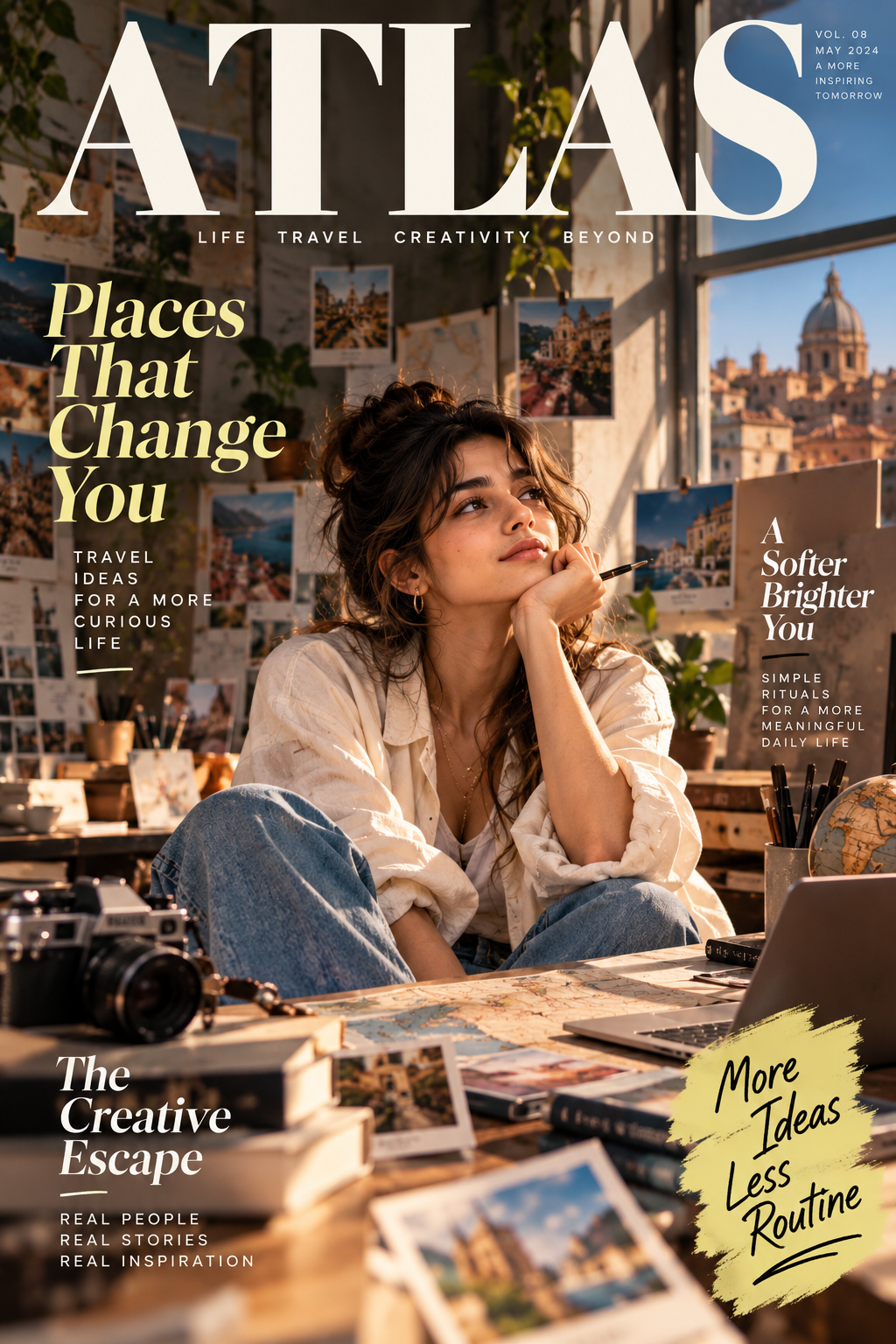
COVER STORY — Cinematic Editorial Magazine
COVER STORY is a dynamic magazine-cover generator designed to turn ordinary portraits and creative concepts into sophisticated editorial publications. Featuring cinematic photography, oversized masthead typography, carefully positioned coverlines, issue details, and immersive environments, this template recreates the visual appeal of premium fashion, travel, culture, lifestyle, technology, business, and creative magazines. Customize the featured model, magazine identity, editorial subject, headlines, photography style, environment, and color palette to create distinctive, publication-ready magazine cover artwork.
Create an exceptionally polished, photorealistic professional magazine cover for an original fictional publication. The result should look like a real premium magazine photographed and art-directed by an experienced editorial design team.
Combine a compelling human subject, cinematic environmental photography, sophisticated magazine typography, meaningful editorial headlines, and carefully arranged publication details.
The cover should feel like a genuine publication with a clear editorial identity, not a promotional poster, social media advertisement, or ordinary portrait with text overlaid.
Every generation should be capable of producing a distinctly different magazine concept based on the user's inputs.
A. Dynamic Inputs
Magazine identity
Magazine name: [MAGAZINE_NAME]
Magazine category: [MAGAZINE_CATEGORY]
Editorial niche: [EDITORIAL_NICHE]
Magazine tagline: [MAGAZINE_TAGLINE]
Issue number: [ISSUE_NUMBER]
Publication date: [PUBLICATION_DATE]
Edition or special issue: [SPECIAL_EDITION]
Publication identity: [PUBLICATION_IDENTITY]
Featured subject
Subject type: [SUBJECT_TYPE]
Model name: [MODEL_NAME]
Gender presentation: [GENDER_PRESENTATION]
Adult age range: [AGE_RANGE]
Ethnicity or cultural background: [ETHNICITY]
Skin tone: [SKIN_TONE]
Facial features: [FACIAL_FEATURES]
Hairstyle: [HAIRSTYLE]
Clothing and styling: [OUTFIT]
Accessories: [ACCESSORIES]
Pose: [POSE]
Facial expression: [EXPRESSION]
Personality: [PERSONALITY]
Editorial concept
Main cover story: [MAIN_COVER_STORY]
Primary headline: [PRIMARY_HEADLINE]
Supporting headline: [SUPPORTING_HEADLINE]
Secondary coverlines: [SECONDARY_COVERLINES]
Featured editorial topics: [EDITORIAL_TOPICS]
Short cover description: [COVER_DESCRIPTION]
Featured quote: [FEATURED_QUOTE]
Callout or special feature: [SPECIAL_FEATURE]
Environment and photography
Location: [LOCATION]
Environment: [ENVIRONMENT]
Background details: [BACKGROUND_DETAILS]
Photography style: [PHOTOGRAPHY_STYLE]
Lighting: [LIGHTING_STYLE]
Camera perspective: [CAMERA_PERSPECTIVE]
Mood: [MOOD]
Depth of field: [DEPTH_OF_FIELD]
Graphic direction
Primary color: [PRIMARY_COLOR]
Secondary color: [SECONDARY_COLOR]
Accent color: [ACCENT_COLOR]
Typography style: [TYPOGRAPHY_STYLE]
Layout direction: [LAYOUT_STYLE]
Graphic accents: [GRAPHIC_ACCENTS]
Text language: [TEXT_LANGUAGE]
Aspect ratio: [ASPECT_RATIO]
When inputs are missing, make creative decisions based on the magazine category and editorial concept. Do not display raw variable names, brackets, or placeholder text.
B. Magazine Identity and Masthead
Create a distinctive magazine identity using [MAGAZINE_NAME] as the dominant masthead.
The masthead should be large, memorable, and professionally typeset. Select a typography style that complements [MAGAZINE_CATEGORY].
Possible approaches include:
Elegant high-contrast serif typography for fashion, culture, and lifestyle.
Bold condensed sans-serif typography for technology, business, and contemporary culture.
Expressive editorial typography for art, music, and creative publications.
Refined minimalist lettering for luxury, architecture, and travel.
Allow the masthead to interact naturally with the featured photograph. It may extend behind the subject, partially overlap the background, or sit prominently across the upper section.
Keep the magazine name correctly spelled and clearly recognizable.
Add issue information such as volume, date, edition, and a small publication descriptor in a restrained typographic treatment.
C. Featured Cover Photography
Create one dominant, highly detailed photograph featuring [SUBJECT_TYPE].
The featured subject should be the main visual attraction and occupy approximately 55–75% of the cover.
Maintain the specified facial identity, ethnicity, hairstyle, skin tone, outfit, and other defining features.
Use [POSE] and [EXPRESSION] to communicate [PERSONALITY] and [MAIN_COVER_STORY].
The subject should interact naturally with [ENVIRONMENT]. The location and surrounding objects must support the editorial narrative.
For example:
A creative professional in an art-filled studio.
A fashion model in an architectural environment.
A traveller in an unfamiliar destination.
An entrepreneur in a contemporary workspace.
A musician backstage or in a recording studio.
An athlete in a training environment.
A chef in a working kitchen.
An architect surrounded by models and drawings.
Avoid generic studio portraits when the editorial concept calls for an immersive environment.
D. Primary Cover Headline
Display [PRIMARY_HEADLINE] as the strongest secondary typographic element after the masthead.
The headline should be visually striking and closely connected to [MAIN_COVER_STORY].
Use typography, scale, line breaks, and positioning to make the headline feel like a genuine magazine coverline.
It may appear in a large serif, bold sans-serif, expressive italic, or other suitable editorial style.
Do not simply repeat the magazine name or use generic promotional phrases.
E. Supporting Coverlines
Include [SUPPORTING_HEADLINE] and [SECONDARY_COVERLINES] in carefully selected positions around the subject.
Create a clear hierarchy:
Magazine masthead.
Main cover headline.
Supporting coverlines.
Small editorial descriptions.
Issue and publication information.
Each supporting headline should introduce a different editorial angle or interesting story.
Use concise, meaningful language rather than generic filler.
Avoid placing text over important facial features or other critical details.
F. Editorial Feature Blocks
Include two or three small editorial blocks describing interesting stories within the issue.
Use [EDITORIAL_TOPICS] and [COVER_DESCRIPTION] as the foundation.
Each block should have:
A short headline.
A brief supporting description.
A distinct typographic treatment.
For example, a travel magazine could feature destination discoveries, cultural experiences, and slow travel. A technology publication could feature emerging innovations, digital culture, and future-focused ideas.
These stories should feel like real magazine content rather than advertising slogans.
G. Featured Quote or Special Feature
If [FEATURED_QUOTE] is supplied, include it as a visually distinctive editorial quotation.
If [SPECIAL_FEATURE] is supplied, present it as a small callout, sticker, printed note, or highlighted cover badge.
The graphic treatment should complement the overall publication identity without competing with the main photograph.
Do not invent quotes attributed to real people. Use original editorial copy when no quote is supplied.
H. Environment and Art Direction
Build the environment around [LOCATION], [ENVIRONMENT], and [BACKGROUND_DETAILS].
Include relevant objects, textures, architecture, lighting, and atmospheric details that make the setting believable.
The background should feel lived-in and photographically authentic.
Use selective depth of field to separate the subject from the environment while retaining enough visual detail to establish the story.
Do not use unrelated decorative objects simply to fill empty space.
I. Magazine Layout Variations
Choose a composition that works naturally for the subject and editorial category. Do not force every cover into the same layout.
Possible layout directions:
Editorial Portrait: Large central portrait, oversized masthead, coverlines along the left and right margins.
Asymmetrical Feature: Subject positioned off-center, headline occupying the opposite side, small editorial blocks distributed around the image.
Full-Bleed Photography: Large environmental portrait filling almost the entire canvas, with typography integrated into open areas.
Minimal Luxury: Restrained typography, large negative space, subtle issue details, and a powerful portrait.
Bold Contemporary: Oversized typography, overlapping coverlines, expressive graphic accents, and high-contrast photography.
Documentary Editorial: Candid subject placement, environmental storytelling, smaller typography, and authentic photographic texture.
Select one primary layout direction based on [LAYOUT_STYLE]. The layout must support readability and preserve the subject's visibility.
J. Color and Typography
Use [PRIMARY_COLOR], [SECONDARY_COLOR], and [ACCENT_COLOR] to create a coherent publication identity.
Coordinate typography with the magazine category, photographic environment, and subject's clothing.
Typography should look professionally typeset, with carefully controlled spacing, alignment, line breaks, and contrast.
Use a maximum of three complementary type families.
Ensure that text remains legible against the photographic background. Use subtle shadows, darkened areas, or restrained color blocks only when needed.
K. Photography and Lighting
Apply [PHOTOGRAPHY_STYLE], [LIGHTING_STYLE], [CAMERA_PERSPECTIVE], and [DEPTH_OF_FIELD].
Use realistic skin texture, believable materials, natural body proportions, and professional photographic detail.
Lighting should establish the mood of the publication, whether warm and intimate, dramatic and cinematic, bright and optimistic, or cool and contemporary.
Avoid excessive retouching, artificial skin smoothing, or exaggerated facial expressions.
L. Text Accuracy and Publication Authenticity
All visible text must be intentionally authored and relevant to the magazine concept.
Preserve the exact spelling of:
Magazine name.
Main cover headline.
Supporting headlines.
Issue details.
Editorial feature descriptions.
Featured quote.
Do not repeat the same headline in multiple locations.
Do not generate random paragraphs, meaningless lettering, invented brand logos, or irrelevant publication details.
The result should resemble a professionally designed magazine cover that could plausibly appear on a newsstand or in a premium digital publication.
M. Final Output
Generate one high-resolution magazine cover in [ASPECT_RATIO].
The final composition must contain:
A recognizable magazine masthead.
A dominant cinematic subject photograph.
One compelling primary headline.
Supporting editorial coverlines.
Issue and publication details.
Two or three meaningful editorial feature blocks.
A coherent typography and color system.
A professionally art-directed photographic environment.
Negative constraints: No generic poster design, no unrelated headlines, no duplicated text, no random logos, no watermark, no inconsistent facial features, no distorted anatomy, no excessive typography, no illegible text blocks, no unwanted padding, and no copying of existing magazine mastheads or cover designs.