


 Image
Character sheet
Meet Cute — Rom-Com Character Scrapbook
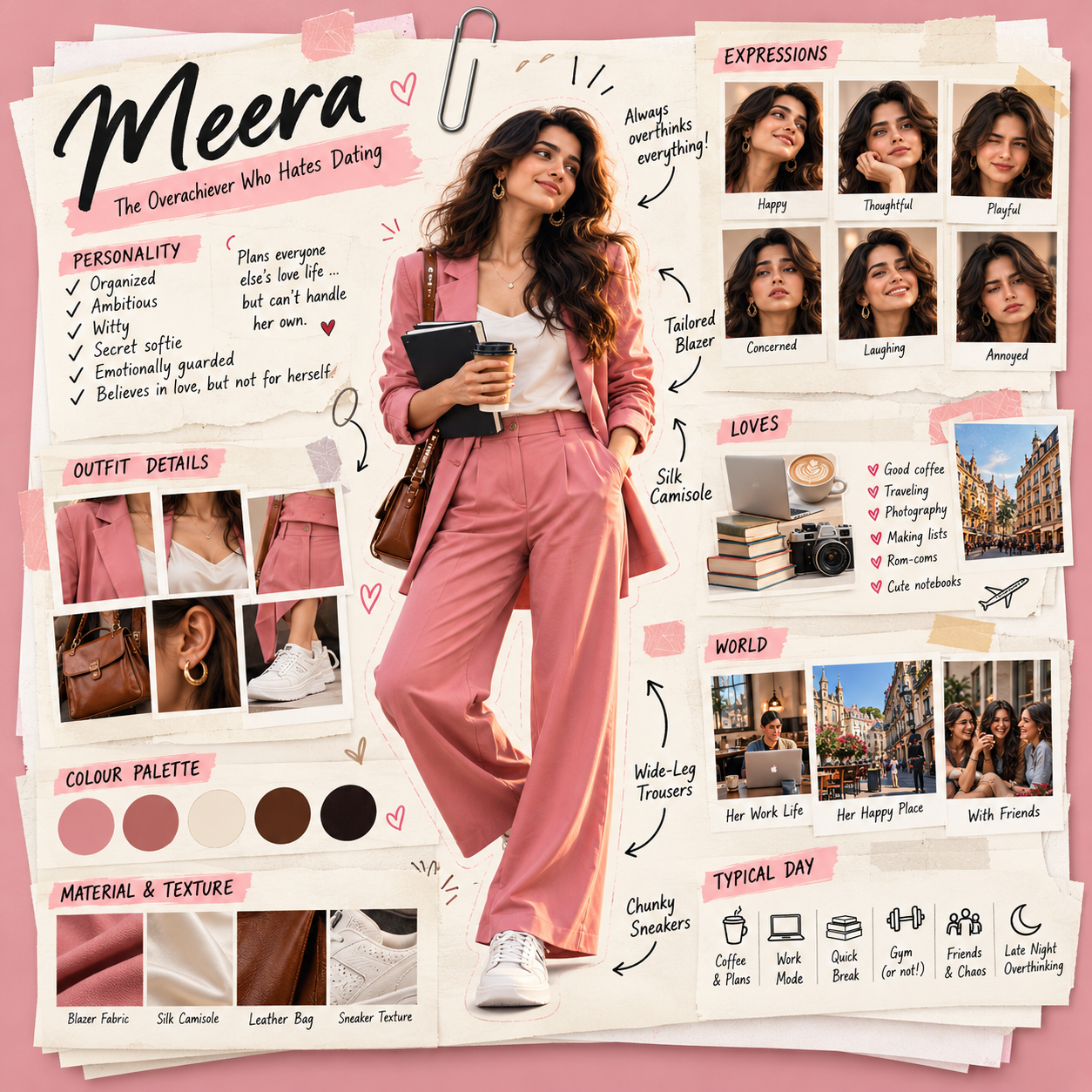
Meet Cute is a creative character-design template for visualizing original romantic-comedy characters through a playful scrapbook aesthetic. A prominent full-body portrait anchors a layered paper composition, surrounded by handwritten annotations, outfit close-ups, facial expression studies, personal interests, color palettes, material swatches, lifestyle snapshots, and everyday routines. Customize the character's appearance, cultural background, fashion, personality, romantic archetype, hobbies, relationships, and fictional world to create a distinctive character profile for rom-com films, web series, storytelling, AI filmmaking, and character-driven campaigns.
Create a beautifully art-directed romantic-comedy character profile board for one original fictional adult character. The image should resemble a premium fashion scrapbook mixed with a character-design moodboard, using layered paper sheets, candid photography, handwritten notes, playful doodles, clothing details, personal objects, and lifestyle snapshots.
The result should communicate who the character is, how they dress, how they express emotions, what they love, and how they fit into a romantic-comedy story.
The entire composition must be visually cohesive, detailed, charming, and editorially polished. Adapt all creative elements to the user's inputs while preserving the scrapbook presentation style.
A. Dynamic Character Inputs
Character identity
Character name: [CHARACTER_NAME]
Character tagline: [CHARACTER_TAGLINE]
Gender presentation: [GENDER_PRESENTATION]
Adult age range: [AGE_RANGE]
Ethnicity or cultural background: [ETHNICITY]
Skin tone: [SKIN_TONE]
Face shape and defining features: [FACIAL_FEATURES]
Eye color: [EYE_COLOR]
Hairstyle and hair texture: [HAIRSTYLE]
Body build: [BODY_BUILD]
Personality and story
Personality traits: [PERSONALITY_TRAITS]
Character archetype: [ROMCOM_ARCHETYPE]
Romantic trope: [ROMANTIC_TROPE]
Biggest strength: [STRENGTH]
Biggest flaw: [FLAW]
Secret soft spot: [SECRET_SOFT_SPOT]
Romantic goal: [ROMANTIC_GOAL]
Character backstory: [BACKSTORY]
Relationship status or dynamic: [RELATIONSHIP_DYNAMIC]
Fashion and appearance
Signature outfit: [SIGNATURE_OUTFIT]
Secondary outfit: [SECONDARY_OUTFIT]
Footwear: [FOOTWEAR]
Accessories: [ACCESSORIES]
Fashion aesthetic: [FASHION_AESTHETIC]
Dominant colors: [COLOR_PALETTE]
Fabrics and materials: [MATERIALS]
Lifestyle and visual world
Favorite things: [FAVORITE_THINGS]
Hobbies: [HOBBIES]
Everyday routine: [DAILY_ROUTINE]
Favorite place: [FAVORITE_PLACE]
Signature personal object: [SIGNATURE_OBJECT]
Social habits: [SOCIAL_HABITS]
Setting or city: [SETTING]
Overall mood: [OVERALL_MOOD]
Background color: [BACKGROUND_COLOR]
Typography style: [TYPOGRAPHY_STYLE]
Text language: [TEXT_LANGUAGE]
Aspect ratio: [ASPECT_RATIO]
When an input is not provided, infer a coherent choice from the remaining details. Do not display placeholder variables or bracketed instructions in the final image.
B. Overall Composition
Create a single portrait-format scrapbook board with a large central full-body character cutout and multiple surrounding reference sections.
Use overlapping cream paper sheets, subtle torn edges, realistic paper fibers, tape pieces, oversized paperclips, handwritten arrows, small stickers, doodled hearts, and instant-photo frames.
The composition should feel handmade yet professionally art-directed. Arrange the sections asymmetrically, with varied sizes and slight rotations. Avoid a rigid grid or six identical panels.
The central character should occupy approximately 40–50% of the board's visual area, with the surrounding sections providing meaningful details about their identity.
Use [BACKGROUND_COLOR] as the foundation and coordinate the paper, annotation, and accent colors with [COLOR_PALETTE].
C. Main Character Portrait
Place one prominent, full-body portrait of [CHARACTER_NAME] near the center of the board.
Show the character in [SIGNATURE_OUTFIT], with a natural, expressive pose that reflects [PERSONALITY_TRAITS].
Preserve the specified face shape, skin tone, hairstyle, body proportions, outfit construction, accessories, and distinctive features.
The character should look like a believable adult in a contemporary romantic-comedy film, with natural skin texture, realistic fabrics, expressive eyes, and authentic body language.
Use a clean cutout effect with a thin white sticker-like outline and a soft shadow separating the figure from the paper background.
Avoid exaggerated glamour poses or generic fashion-model expressions unless they suit the character's personality.
D. Character Personality Notes
Create a handwritten profile section titled PERSONALITY.
Include four to six short, specific personality traits derived from [PERSONALITY_TRAITS], [STRENGTH], [FLAW], and [SECRET_SOFT_SPOT].
Add one short, witty character observation that feels like a line from a romantic-comedy screenplay.
Examples of the tone:
“Plans everyone else's life. Avoids her own.”
“Flirts confidently. Panics immediately.”
“Claims to hate romance. Knows every love song.”
Generate original lines that match the character rather than copying these examples.
Use handwritten text, checkmarks, arrows, tiny hearts, underlines, or small doodles. Keep the notes concise and legible.
E. Facial Expression Studies
Create a cluster of five or six small portrait photographs showing the same character with different expressions.
Choose appropriate expressions from:
Happy and relaxed.
Thoughtful or daydreaming.
Amused or laughing.
Awkward during a romantic moment.
Concerned or disappointed.
Annoyed but secretly affectionate.
Each portrait must preserve the same facial identity, hairstyle, complexion, and defining features.
Place small handwritten captions beneath the photographs. The expressions should be natural, relatable, and suitable for a romantic comedy.
F. Outfit Breakdown
Create a dedicated section titled OUTFIT DETAILS with small photographic close-ups of the character's clothing and accessories.
Include relevant details such as:
Main jacket, blazer, sweater, or outerwear.
Inner top, shirt, or camisole.
Trousers, skirt, or jeans.
Shoes or boots.
Bag, watch, jewelry, eyewear, or signature accessory.
Use thin hand-drawn arrows to connect the details to short annotations.
Describe the actual garments in [SIGNATURE_OUTFIT] and [MATERIALS]. Do not introduce unrelated clothing or accessories.
If a secondary outfit is specified, include a small additional outfit reference without changing the character's identity.
G. Favorite Things and Personal Objects
Create a charming section titled LOVES or LITTLE OBSESSIONS.
Display four to six small photographic objects or lifestyle references representing [FAVORITE_THINGS], [HOBBIES], and [SIGNATURE_OBJECT].
Examples could include coffee cups, books, headphones, flowers, a camera, travel tickets, handwritten notes, pastries, a laptop, or movie tickets.
Add short handwritten annotations explaining the character's interests or habits.
Choose objects that reveal personality and support the story rather than simply filling empty space.
H. The Character's World
Create a small section titled HER WORLD, HIS WORLD, or THEIR WORLD, depending on the character.
Include three distinct instant-photo-style images depicting:
The character in their everyday environment.
Their favorite place or personal escape.
A meaningful social setting involving friends, family, or a potential romantic interest.
Use [SETTING], [FAVORITE_PLACE], and [RELATIONSHIP_DYNAMIC] to guide these images.
The photographs should feel like candid moments from the character's fictional life, with a consistent visual style and recognizable character identity.
Do not introduce contradictory locations or unrelated characters.